Why Am I Waking Early After the Clock Change?
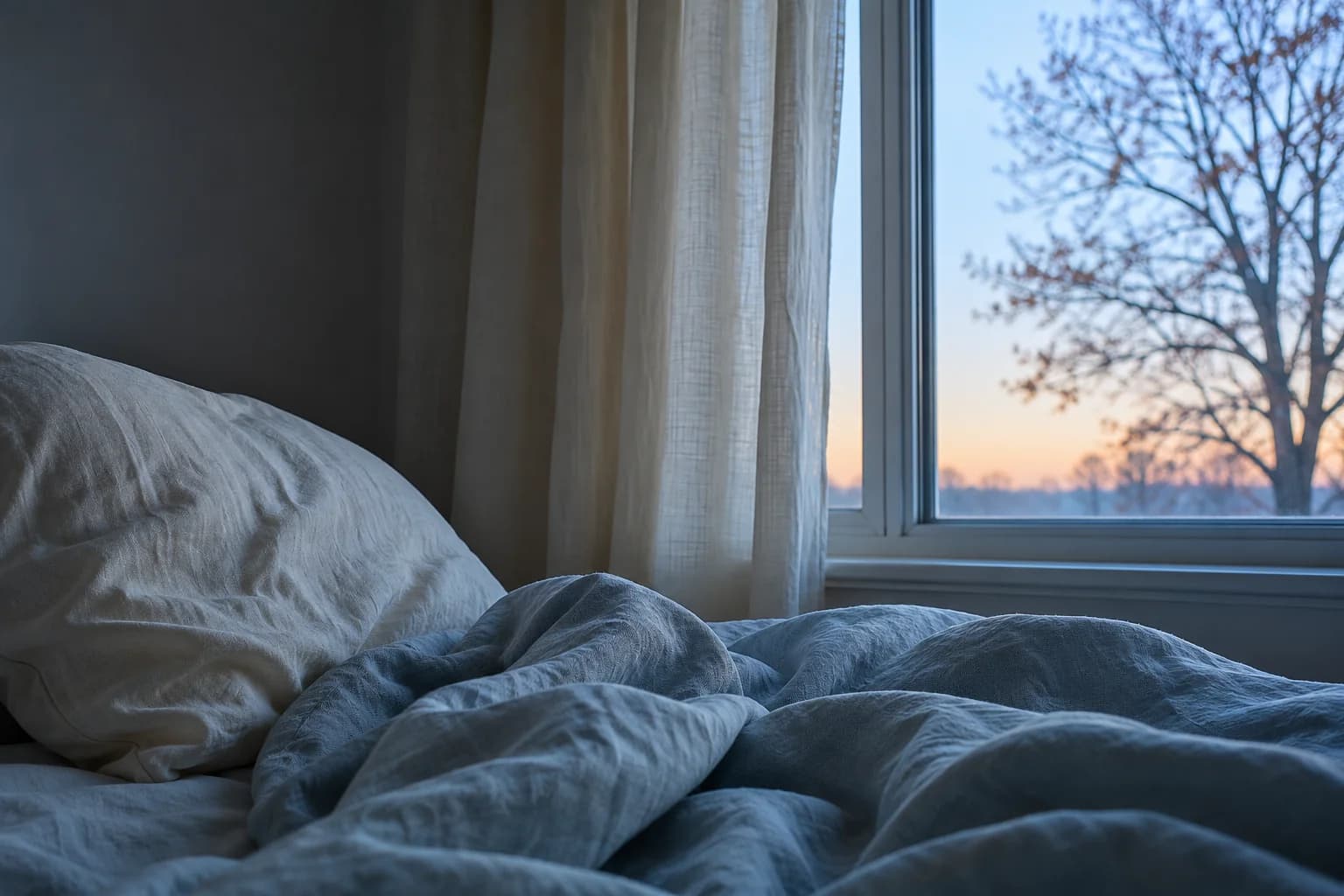
Picture the Monday after the clocks go back. You're wide awake, you check your phone, and it says 5:02. The alarm is an hour away. You were promised an extra hour of sleep and got an extra hour of lying in the dark instead.
Your body clock didn't change. The wall clock did.
You have an internal clock that runs on a roughly 24-hour cycle, and light is what sets it. Daylight tells your brain it's daytime. Darkness lets melatonin rise in the evening so you get sleepy.
Did your night move, or get shorter?
Look at both ends of the night. Sleeping from 10 p.m. to 5 a.m. gives you the same seven hours as 11 p.m. to 6 a.m. It's the same night with new numbers on it. Going to bed at 11 and waking at 5 is different: your window for sleep has shrunk to six hours. Time in bed isn't the same as time asleep, but this quick check tells you whether you're dealing with an early schedule or a short night.
Like a short trip west
When you fly west, local clocks read earlier than your body expects. You're sleepy before everyone else and awake before the hotel breakfast opens. Setting the clocks back creates a similar one-hour mismatch without leaving home.
West is the easier direction. CDC travel guidance notes that people adapt more easily after flying west than east, about 1.5 hours a day on average after long trips. That average comes from travel, so it isn't a timetable for your week. But it points the same way as the research on clock changes below.
How to move your clock later
Keep an early wake-up dim. "Get morning sunlight" is everyday sleep advice, and it works the opposite way from what you need right now. Bright light around your body's usual waking time tends to shift your clock earlier, and earlier is the problem you already have. In its example plan for westward travel, the CDC suggests avoiding bright early-morning light by closing the shades or wearing dark sunglasses. At home, that can mean blackout curtains or an eye mask, and not switching on bright lights or scrolling your phone if you wake at 5.
Get light in the late afternoon or early evening. Evening light does the opposite and tends to nudge your clock later. That's why clinicians who use light therapy to move sleep later schedule it for the late afternoon or early evening. Getting outside before sunset, or keeping your home well lit through the evening, follows the same timing. Dim things as bedtime gets close, though, because bright light late at night can make it harder to fall asleep.
Aim for your usual bedtime by the new clock. Waking at 5 can leave you fading early in the evening, and an early night is tempting. But going to bed an hour early keeps your whole night on the old schedule. The CDC's advice to westward travelers is to try to stay up until bedtime at their destination. Being awake longer also builds your drive to sleep, which helps you fall asleep at the later time.
Keep naps short. If the afternoon drags, the same CDC guidance says a 20- to 30-minute nap can help you stay alert, while longer naps can get in the way of sleep that night.
How long it takes
The autumn change tends to be the easier one. In a 2007 study that tracked 50 people for eight weeks around each clock change, sleep and activity timing adjusted readily after the autumn change; activity timing did not fully adjust after the spring change.
There's no fixed number of days to promise, and people differ. A 2024 modelling study predicts that night owls adjust more slowly than early birds, and it points to evening light as the main thing driving the shift. It's a computer model of the body clock, not a trial in people, but it matches the steps above. A 2026 review of 157 studies on clock changes and health found the wider evidence on sleep and body timing limited and mixed.
If early waking keeps wearing you down, NIH advises getting help when too little sleep is affecting your daily life. A clinician will ask when you go to bed, when you wake, how often you wake in the night and how you feel during the day, so a few notes from before and after the change are a good start.
Not sure whether your night got shorter or just moved? Ask the free SageWiz health chat. For example: "Since the clocks went back I wake at 5 instead of 6, but I still go to bed at 11. Is my night shorter, and what should I change?" The chat is educational and free for adults 18 and over in the US, with no account needed to start.
If you're tired all day even when the hours add up, our fatigue article explains what normal blood tests can and can't tell you. And if your sleep tracker is making these mornings look worse, here's what sleep-stage scores actually measure.
Caveats
This is about adults adjusting after the autumn clock change, not shift work. The CDC wrote its advice for travel across time zones, and the sources here don't test that set of steps after a one-hour change at home. We aren't suggesting a light box. If you're considering one, ask a clinician first, especially if you have an eye condition or take medicines that make you sensitive to light.
So tonight, pick your bedtime by the new clock. Tomorrow, check both ends of your night, not just the 5 on your phone.
Curious how we research and check our articles? Read How SageWiz Researches and Checks Its Health Articles.
Evidence
NIH and CDC guidance explains how light sets the body clock and why morning and evening light push it in opposite directions. The practical steps come from CDC advice for westward travel, applied here by comparison, and NIH's description of clinical light therapy. The 2007 study measured real people's sleep timing around both clock changes but was small. The 2024 study is a computer model. The 2026 systematic review shows that the wider research on clock changes and sleep is still limited and mixed.
Evidence used in this article
Primary sources and public health references reviewed for this article.
- A systematic review of epidemiological studies into daylight-saving time & health identifying beneficial & adverse effects
European Journal of Epidemiology / Steponenaite et al., 2026
Systematic review of 157 studies; the sleep and circadian evidence is limited and varies in design and quality.
- Sleep Deprivation and Deficiency: What Makes You Sleep?
NHLBI / NIH
Explains the circadian rhythm, light and darkness as body-clock cues, sleep pressure that builds while awake, and late-night light making sleep harder.
- Jet Lag Disorder
CDC Yellow Book 2026 / Riedy and Williams
Travel guidance: westward travel is easier to adapt to (about 1.5 hours a day on average); morning light tends to shift the clock earlier and evening light later. Used here only as an analogy for a one-hour clock change.
- The human circadian clock's seasonal adjustment is disrupted by daylight saving time
Current Biology / Kantermann et al., 2007
Small study (50 people tracked for 8 weeks around each transition) plus a large survey; sleep and activity timing adjusted readily after autumn, while activity timing did not fully adjust after spring.
- Improving adjustment to daylight saving time transitions with light
Scientific Reports, 2024
Mathematical model of the human circadian clock, not a trial in people; predicts evening light drives re-adjustment and later chronotypes adjust more slowly.
- Circadian Rhythm Disorders: Treatment
NHLBI / NIH
Clinical light therapy: morning use moves sleep earlier, late-afternoon or early-evening use moves it later (including westward jet lag); ask a doctor first with eye conditions or light-sensitizing medicines.
- Insomnia: Diagnosis
NHLBI / NIH
Seek care when sleep loss affects daily life; assessment considers sleep timing, awakenings and daytime function, without waiting for chronic-insomnia criteria.
- Sleep Apnea: Symptoms
NHLBI / NIH
Breathing pauses, gasping and frequent loud snoring warrant medical assessment rather than a clock-change explanation.
- Drowsy Driving
National Highway Traffic Safety Administration
Sleepy driving needs an immediate safety response; caffeine alone does not reliably prevent microsleeps.